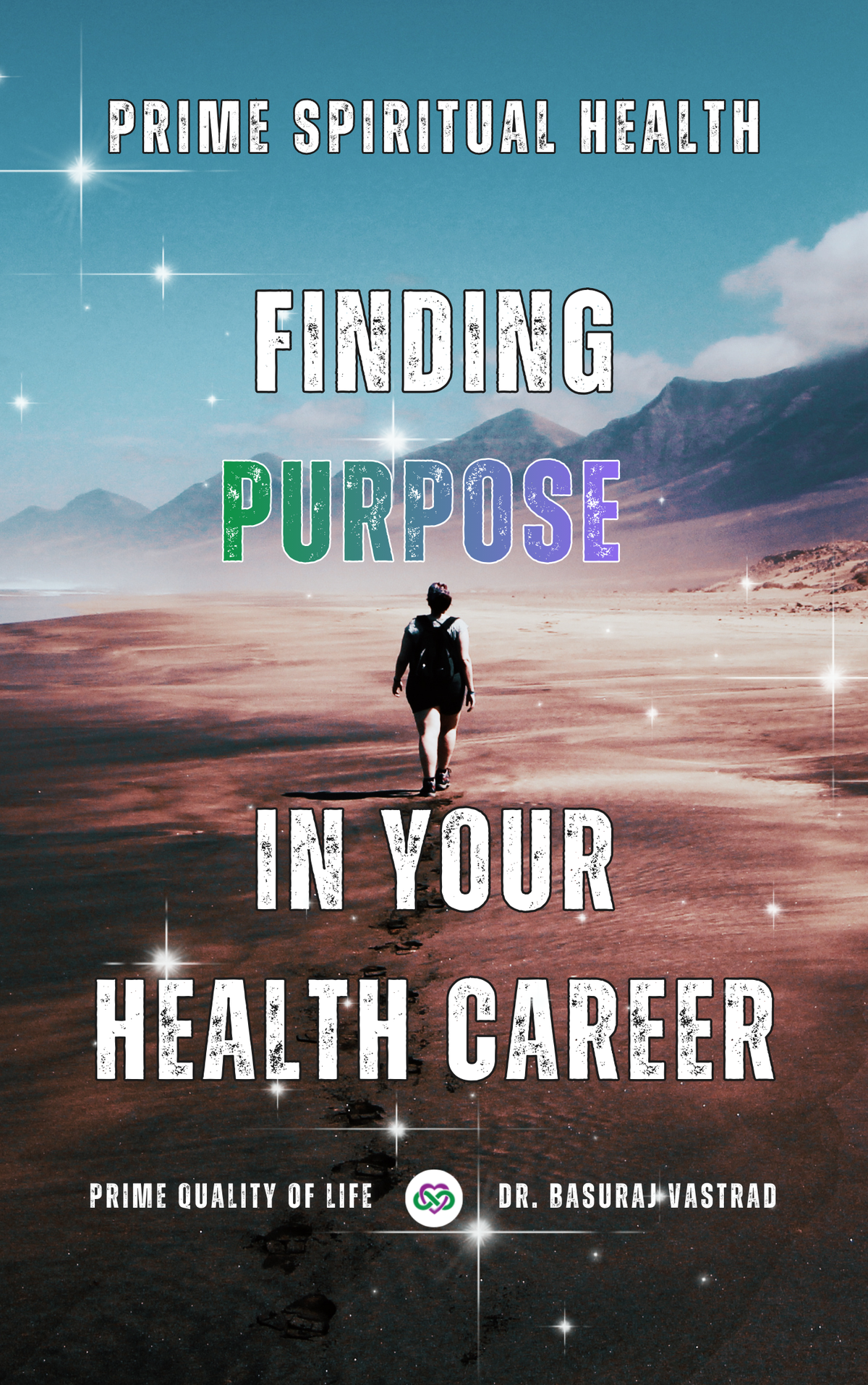
Prime Spiritual Health: Finding Purpose in Your Health Career
Explore how purpose and spiritual alignment can reignite passion, prevent burnout, and create deeper fulfillment in your health career.

Spirituality in Healthcare
You didn't stumble into healthcare by accident. Somewhere in your story — maybe it was a family member's illness, a profound experience with your own health, or simply a deep knowing that this work mattered — you felt called.
But somewhere between that initial calling and your current reality, something often gets lost. The idealism meets the insurance denials, the electronic health records, the administrative burden, the moral compromises, and the sheer exhaustion. The "why" that once burned bright can dim to barely visible embers.
Spiritual health isn't necessarily religious, though it can be. It's about connection to something larger than yourself, a sense of meaning and purpose that transcends the daily grind. It's the difference between a job and a vocation, between going through the motions and feeling genuinely aligned with your work.
When spiritual health is strong, you can endure tremendous difficulty because you understand why it matters. When it's depleted, even small challenges feel insurmountable because you've lost connection to meaning.
This article isn't about imposing any particular belief system. It's about helping you reconnect with — or perhaps discover for the first time — the spiritual dimension of your health career that sustains you through everything else.
Defining Purpose
Purpose is deeply personal, yet it shares common elements among those who've found it.
Purpose is not:
- Your job title or specialty
- External validation or recognition
- Constantly feeling happy or fulfilled
- A fixed state you achieve and maintain forever
Purpose is:
- Your unique answer to "Why does this work matter to me?"
- What gives your effort meaning even when it's hard
- The values you're expressing through your work
- A living, evolving understanding that deepens over time
The Three Levels of Purpose in Healthcare
Personal Purpose
What this work means for your own growth, healing, or journey. Perhaps you're working through family health trauma. Maybe you're developing qualities like patience, courage, or compassion. This isn't selfish — it's honest acknowledgment that you're also transformed by the work.
Relational Purpose
The specific difference you make in individual lives. The patient who finally understood their diagnosis because you took time to explain. The colleague you mentored. The family you supported through their hardest moment. Healthcare is inherently relational work.
Collective Purpose
Your contribution to broader healing, justice, or transformation in healthcare systems or communities. Maybe it's addressing health disparities, changing harmful practices, or advancing your field's knowledge.
Most people need purpose at all three levels to feel fully aligned. Reflect on which levels feel strong for you and which need attention.
Aligning Values with Work
Misalignment between your core values and your daily work creates spiritual suffering — even if everything externally looks successful.
Identifying Your Core Values
What matters most to you?
Common values in healthcare include:
- Compassion and kindness
- Excellence and mastery
- Innovation and creativity
- Justice and equity
- Autonomy and self-determination
- Connection and community
- Service and contribution
- Integrity and authenticity
- Learning and growth
- Balance and sustainability
Choose your top 5. These are your north stars.
The Values Audit
For each core value, ask:
- How does my current work express this value?
- Where am I compromising this value?
- What small change would better align my work with this value?
For example, if "balance" is a core value but you're working 70-hour weeks, there's misalignment creating spiritual distress. If "justice" matters deeply but you work in a system that perpetuates inequities, you need a strategy to address this — even if you can't fix the whole system.
When Misalignment Is Unavoidable
Sometimes you can't immediately change systemic misalignments.
Compartmentalize Strategically
"This insurance requirement violates my values, but I'm working within a broken system I didn't create. I'll do what I must while advocating for change."
Find Compensatory Meaning
If your job itself feels misaligned, find purpose in using the income to support causes you believe in, or developing skills you'll use differently later.
Plan Your Exit
If misalignment is fundamental and unchangeable, honoring your spiritual health might mean planning a transition to work that better fits who you are.
Spiritual health sometimes requires difficult honesty about whether you're in the right role, organization, or specialty.
Mindfulness and Presence
Spirituality happens in the present moment, yet healthcare constantly pulls you into the past — documentation, what you should have done — or future — what's coming next, what might go wrong.
Presence as Spiritual Practice
Being fully present — with a patient, with a task, with yourself — is inherently spiritual.
It says "This moment matters. This person matters. I am here."
Cultivating Presence
Single-Tasking
When with a patient, be with that patient. Resist the urge to mentally draft your documentation or think about the next appointment. This full presence is often what patients remember most.
Sensory Anchoring
Use your senses to return to now. The feel of your stethoscope, the sound of your patient's voice, the light in the room. These details ground you in the present.
Transitions as Sacred Pauses
The moments between patients, between tasks, between work and home — these transitions can be mindful pauses rather than rushed stress. Even 10 seconds of conscious breathing marks the transition.
Beginner's Mind
Approach each patient, each problem, each day as if you're encountering it fresh rather than through the lens of routine or burnout. What would you notice if you were seeing this for the first time?
Presence Despite Pain
Healthcare involves witnessing suffering. Presence doesn't mean you won't feel uncomfortable emotions — it means you'll feel them fully rather than numbing or avoiding them.
This might seem counterintuitive. Why would you want to feel more? Because spiritual health isn't about feeling good — it's about feeling real. When you're present with difficulty, you're also more present for joy, connection, and meaning.
Gratitude Practices
Gratitude isn't toxic positivity that ignores real problems.
It's a discipline of noticing what's working alongside what isn't.
Why Gratitude Matters Spiritually?
Your brain has a negativity bias — it's wired to scan for problems and threats. This kept your ancestors alive but made modern humans miserable. Gratitude practices actively counterbalance this bias, training attention toward what's life-giving.
Spiritually, gratitude connects you to abundance rather than scarcity, to possibility rather than limitation, to interconnection rather than isolation.
Practical Gratitude Practices for Health Professionals
Three Good Things
At day's end, note three things that went well, no matter how small. The IV you got on the first try. The “thank you” from a patient. The lunch that actually tasted good. Your brain learns to scan for these moments.
Gratitude for Challenges
This is advanced practice, but powerful. What difficult situation taught you something? What patient who frustrated you helped you develop patience? This doesn't mean being glad for suffering — it means mining difficulty for growth.
Gratitude for Your Body
Your body carries you through demanding days. Thank your legs for standing through long shifts, your hands for the skilled work they do, your voice for communicating care.
Appreciation for Colleagues
Notice and name what you value in the people you work with. Share it when appropriate. This builds community and reinforces what you want more of.
Gratitude Rounds
Some teams start meetings with each person sharing one thing they're grateful for from the past week. This reframes team culture around appreciation rather than just problem-solving.
Connection with Patients and Colleagues
Spiritual health is relational — it grows through authentic connection with others.
The Healing Power of Connection with Patients
Healthcare is one of the few professions where strangers trust you with their most vulnerable moments. This is sacred work, whether or not you use religious language for it.
Ways to Honor this Sacred Trust
See the Person, Not Just the Case
Each patient is someone's beloved. They have fears, hopes, histories, and futures. The few moments you invest in seeing their humanity can be transformative for both of you.
Share Appropriate Vulnerability
Clinical boundaries are important, but selective authenticity builds connection. "I've struggled with similar health challenges" or "I don't have all the answers, but I'm committed to figuring this out with you" can be powerful.
Witness Suffering Without Fixing It
Sometimes the most spiritual thing you can offer is simple presence with someone's pain. Not minimizing it, not rushing to solve it, just acknowledging it, "This is really hard."
Celebrate Wins Together
When someone's health improves, share genuine joy in their progress. Your delight in their healing is part of the healing.
Connection with Colleagues
Healthcare can be isolating despite being constantly surrounded by people. Spiritual connection with colleagues requires intentionality.
Create Meaning Together
Share stories of why you do this work. What brought each person to healthcare? What keeps them going? These conversations build collective purpose.
Support Each Other's Humanity
When a colleague is struggling — with a difficult case, personal crisis, or burnout — showing up for them is spiritual practice. We're not meant to do hard things alone.
Process Difficult Experiences Collectively
After a particularly challenging case, death, or ethical dilemma, debriefing together helps everyone integrate the experience rather than carrying it in isolation.
Celebrate Milestones
Acknowledge professional achievements, personal milestones, and the accumulation of shared experience. Ritual and recognition feed the spirit.
Finding Meaning in Challenges
The most profound spiritual growth often comes through difficulty, not despite it.
Reframing Adversity
Every challenge in healthcare can be viewed through multiple lenses.
The Obstacle
"This is in my way, making my life harder, something to overcome or endure."
The Teacher
“What is this situation revealing about me, my limits, my growth edges, or my values? What am I learning?"
The Invitation
"What is this experience calling me to become? What new capacity is it developing in me?"
Not every difficulty deserves reframing into something positive — some things are just hard and wrong and shouldn't happen. But many challenges contain hidden gifts when we're willing to look.
Common Healthcare Challenges and Their Spiritual Opportunities
Difficult Patients
Teachers of patience, compassion for people who are suffering, boundary-setting, and the limits of your control.
Medical Errors or Mistakes
Humility, forgiveness of self and others, commitment to improvement, understanding your shared humanity.
System Failures
Clarity about your values, advocacy skills, resilience, creative problem-solving, acceptance of what you can't control.
Burnout
Honest assessment of sustainability, boundary development, reconnection with purpose, sometimes necessary career transitions.
Patient Deaths
Presence with grief, acceptance of medical limitations, meaning-making around mortality, deepened appreciation for life.
Vicarious Trauma and Meaning-Making
Repeatedly witnessing trauma can damage your spirit. Meaning-making is protective.
Narrative Coherence
How does this difficult experience fit into the larger story of your life and work? What role does it play?
Purpose Reinforcement
How does facing this difficulty serve the purpose that called you to healthcare?
Collective Healing
How can processing this with colleagues or using it to improve systems transform individual suffering into collective growth?
Creative Expression
Some health professionals process trauma through writing, art, music, or other creative outlets that help integrate difficult experiences.
Nurturing Your Spirit
Your spiritual health — your connection to purpose, meaning, values, and something larger than yourself — is what transforms healthcare from a job into a calling. It's what sustains you when everything else feels depleted.
But spiritual health doesn't maintain itself. It requires regular nurturing through:
- Reconnecting with why this work matters to you
- Aligning your daily actions with your deepest values
- Practicing presence rather than autopilot
- Cultivating gratitude alongside acknowledging difficulty
- Building authentic connections with patients and colleagues
- Finding meaning even in challenging experiences
You don't need to adopt any particular spiritual or religious framework. You simply need to tend to the dimension of your work that transcends the purely mechanical, technical, or transactional.
The technical skills you developed in training made you competent. The spiritual dimension of your work makes you complete.
When was the last time you felt deeply connected to the purpose of your work? What would help you reconnect with that feeling? That's your starting point.
Your spirit needs nourishment as much as your body and mind. Don't neglect it. The work you do is too important, and you are too valuable, to let the light within you go out.
What one practice will you begin this week to nurture your spiritual health?
Related Reading
- Prime Physical Health: 10 Habits of Highly Effective Health Pros
- Prime Mental Health: Managing Stress in High-Pressure Professions
- Prime Emotional Health: Emotional Intelligence for Health Leaders
- Prime Financial Health: Financial Wellness for Health Professionals
- Prime Relational Health: Building Stronger Patient Relationships
- Prime Social Health: Networking Strategies for Health Pros
- Prime Factor P — Free eBook — Claim Free eBook
- Prime A-Z Formulas For A Prime Life — Special Gift — Claim Special Gift
About Dr. BasuRaj Vastrad
Dr. BasuRaj Vastrad is the Founder and CEO of Prime Quality of Life, a Physician-Philosopher, former Orthopaedic Hand and Micro-Surgery Consultant, Author, and International Speaker dedicated to helping individuals unlock their fullest potential and live a truly Prime Life.
Through decades of experience in coaching, consulting, and mentoring, he has guided individuals worldwide to design lives of health, happiness, wealth, fulfillment, and purpose. His uniquely integrated approach blends practical strategies, personal insight, and holistic development to help people create meaningful transformation in both personal and professional life.
Dr. BasuRaj is the creator of the Prime Quality of Life Framework, a holistic philosophy centered on purposeful living, resilience, mindfulness, innovation, empowerment, growth, fulfillment, and legacy.
Prime Quality of Life Philosophy
“Love What You Do and Do What You Love”
Learn More:
https://primequalityoflife.com/
https://www.amazon.com/author/dr_basuraj_vastrad/
https://shop.primequalityoflife.com/
https://primequalityoflife.lpages.co/primelifemagazine/
Contact Us at info@primequalityoflife.com – for any updates, feedback, comments, or questions.
Explore more insights on health, purpose, and elevated living at Prime Life Magazine.
Disclaimer
The content published on this website is for general informational and educational purposes only and should not be considered professional advice. While we strive for accuracy, readers are encouraged to verify information and seek appropriate professional guidance before making decisions based on the content.
© Prime Life Magazine
Part of the Prime Quality of Life® and Prime Life Media Series
Prime Quality of Life® — Copyright © 2026 . All Rights Reserved